Durable Headsets for Elementary Students: What to Look For
A practical guide to selecting classroom headsets that hold up through the school year, featuring Cyber Acoustics' classroom-tested lineup built specifically for K-12 learners, charter academies, and charter management organizations preparing for back to school.
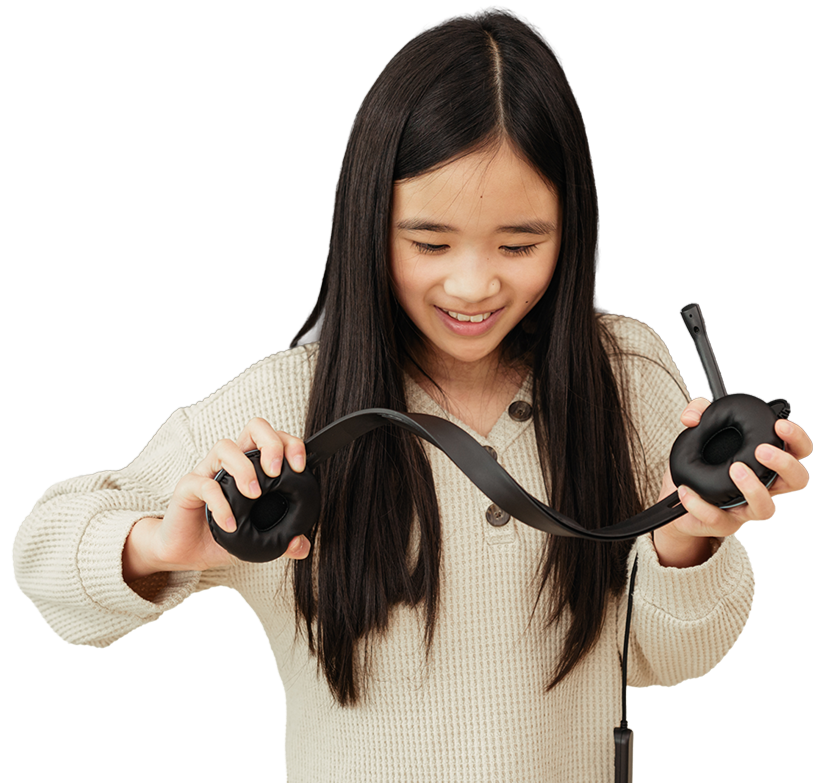
Elementary classrooms are hard on gear. Earpads get ripped off, headsets get dropped, cables pulled, and stretched daily, shared between students, stuffed into bins, and subjected to the kind of handling no standard headset is designed for. Reinforced cable points, flexible headbands, braided chew-resistant cable, and double-stitched cleanable earcups are what separate a headset that lasts longer than a school year from one that fails before winter break. For audio-based instruction and computer-based testing, such as TELPAS or CAASPP, durable and reliable tech is not an option. Students need headsets that stay connected, stay working, and that deliver clear sound tuned for speech and instructions.
As charter schools finalize their back-to-school supply list, headsets are one of the most overlooked line items, and one of the first things to fail once students are back in daily rotation. This guide covers every criterion that matters for shared elementary use, along with what to look for when choosing headsets.
Jump To
What to Look For: 7 Criteria That Actually Matter for Education Headsets
Here is what to look for.
Cable and Connector Durability
A durable plug that can withstand repeated plugging and unplugging. This is important for both the port on the computer and the headset connector design.
Over-Ear Design & Passive Noise Isolation
An over-ear seal reduces classroom chatter with no electronics required. On-ear designs let ambient noise through, increasing distraction and listening fatigue during extended sessions. This matters just as much for wired headsets for school use in charter classrooms as it does in traditional layouts.
Headband Flexibility
A headband built for thousands of stress cycles without cracking outlasts the rigid plastic in most entry-level sets. It should bend rather than shatter when dropped, stepped on, or twisted.
Ear Cushion Quality & Hygiene
Leatherette earpads are non-porous, wipe clean with a disinfecting wipe, and outlast fabric cushions in shared use. Fabric is difficult to sanitize and degrades faster. Also, look for double stitched earcups, as they last longer against students that may try to pick at the earcups.
Microphone Design
A flexible or rotating boom mic positioned close to the mouth reduces background pickup and delivers clear audio for reading assessments and online instruction. For younger students, a boom that is adjustable and flexible for smaller head sizes is critical.
Device Compatibility
Classrooms often standardize on an input type such as USB-A, USB-C, and 3.5mm. Before purchasing headsets, it's important to confirm which connector is compatible with the devices your school uses to ensure a consistent experience for students.
Weight & Age-Appropriate Fit
Light weight headsets with earcups sized for grades K-12 prevent the fatigue and constant readjustment that come with adult-sized headsets on young students.
Charter School Buying Guide: Headsets, Supply Lists, and Bulk Procurement
While many of the purchasing challenges charter schools face are shared across K-12 education, such as limited budgets and the need to support a mix of student devices, charter management organizations (CMOs) often have the added responsibility of standardizing technology across multiple campuses while balancing varying local purchasing needs. For charter management organizations purchasing headsets in bulk, standardizing on a single headset series with multiple connector options (3.5mm, USB-A, and USB-C) simplifies procurement across campuses using different devices. This approach reduces the number of products and vendors to manage while making replacement inventory interchangeable between schools, helping streamline purchasing, deployment, and ongoing IT support.
What headset does my charter school require?
Most charter schools, especially online and hybrid charter academies, require a wired headset with a working microphone that is compatible with the school’s testing and video conferencing (Zoom, Google Meet, or Teams being among the most popular). Regardless of what platform is used, a wired, over-ear headset with a boom or inline microphone is always a reliable option. Look for something plug-and-play that requires no software or drivers. Options with in-line volume and mute are a great way for students to have easily accessible controls. Families searching for the best headset for online use should prioritize durability and mic clarity over wireless convenience, as wired connections provide the most stable call quality during live instruction. An added benefit is there is no need to remember to charge the headset.
Durable headset for charter schools and charter academies
For headsets for charter academy environments where devices are shared or checked out daily, durability criteria matter even more than, as shared use leads to faster wear and tear. Look for the same construction standards outlined above (reinforced cable, stress-tested headband, double-stitched leatherette earpads) plus a design that survives being packed in a backpack between home and campus.
The Cyber Acoustics Education Headset Series
Three grade-targeted series mean you are placing the right headset with the right student. Every model is purpose-built for its age group, with the same durable construction foundation across all three, and every series works well as charter school classroom headsets for in-person, hybrid, or online charter academy use.
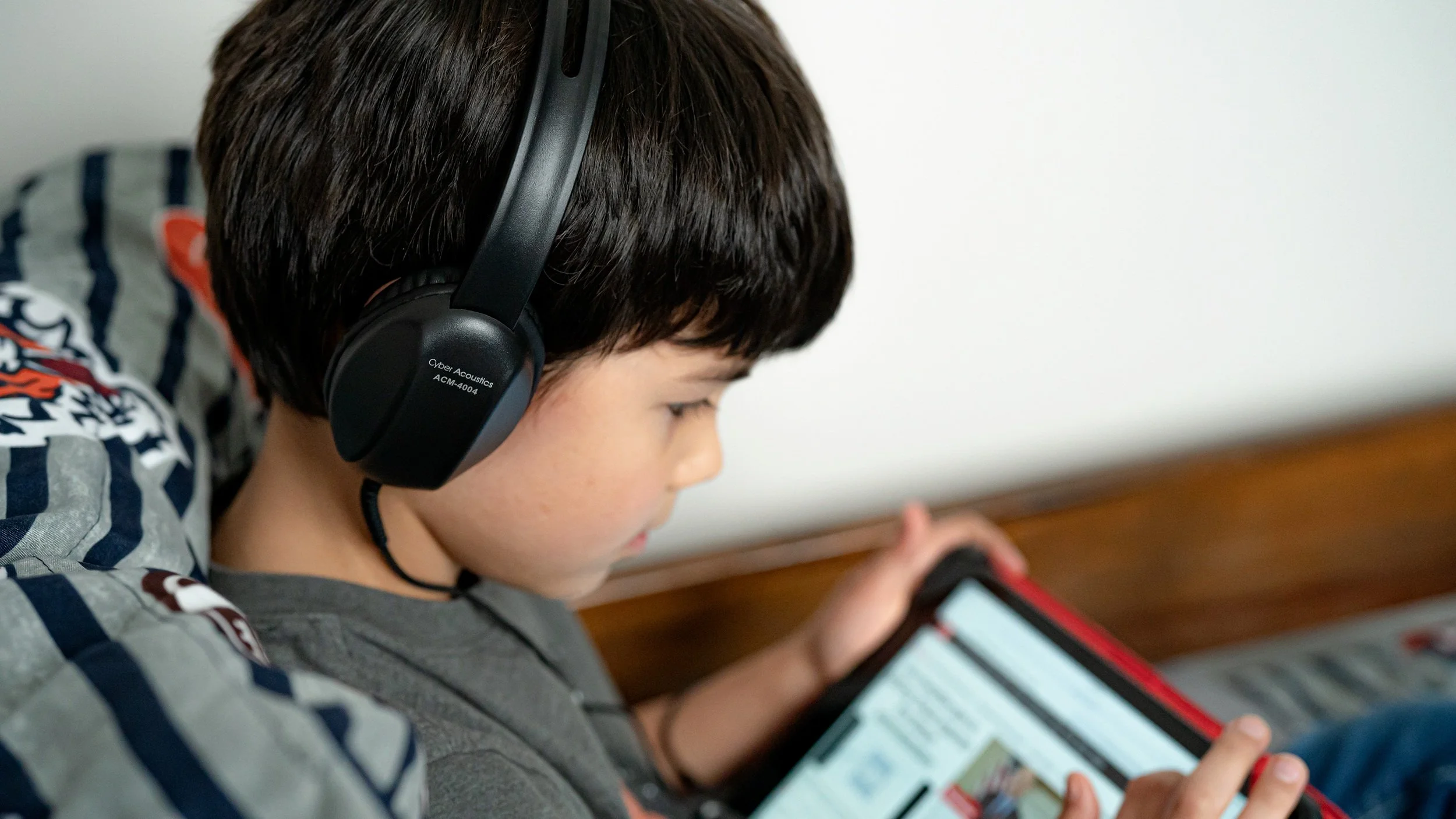
Designed specifically for early elementary students, with smaller earcups, lighter weight, and the full classroom-tough construction of our education lineup.
- Smaller earcups and reduced weight sized for ages 4–12
- TuffCord braided cable that resists chewing, tangling, and repeated pulling
- Reinforced internal steel rod in 3.5mm models
- Double-stitched leatherette earpads, easy to disinfect between students
- Flexible boom microphone for online learning and reading assessments
- Stress-cycle tested headband that rolls, bends, and twists without cracking
- Available in 3.5mm, USB-A, and USB-C to match any device fleet
- Plug-and-play on Chromebook, Windows, and Mac with no drivers required

The versatile choice for K–12 classrooms and charter academies alike, with in-line controls that give students volume and mute access; the ambidextrous rotating boom works for left- or right-side wear, making it one of the most flexible wired headsets for school students of any age.
- Ambidextrous rotating boom mic that positions to left or right side
- In-line volume and mute controls for student-managed audio
- Noise-reducing microphone for cleaner audio capture in shared environments
- Double-stitched leatherette earpads, easy to disinfect between students
- Braided TuffCord cable rated for daily classroom wear
- Compatible with Teams, Zoom, Google Meet, and all major platforms
- Available in 3.5mm, USB-A, and USB-C to match any device fleet

Larger earcups and a fully adjustable headband for secondary-level students, with the same durable TuffCord and leatherette earpad construction as the full education lineup. A solid option for middle and high school charter academy students who need corded headsets for school that hold up to daily backpack wear.
- Larger earcups sized for middle and high school students
- Braided TuffCord cable rated for daily classroom wear
- Fully adjustable headband for varied head sizes across classrooms
- Flexible boom mic for improved audio clarity during instruction
- Double-stitched leatherette earpads across all models
- 6 ft cable for full desk mobility
- Available in 3.5mm, USB-A, and USB-C to match any device fleet
Quick Comparison: Education Series Headsets
Every headset in our education lineup meets all seven criteria above. Here is how the three series differ on the features that set them apart.
| Criterion | AC-4000 (Grades K–5) | AC-5000 (Grades K–12) | AC-6000 (Grades 6–12) |
|---|---|---|---|
| 1. Cable Durability | ✓ TuffCord + reinforced plug | ✓ TuffCord + reinforced plug | ✓ TuffCord + reinforced plug |
| 2. Over-Ear Design | ✓ Leatherette over-ear seal | ✓ Leatherette over-ear seal | ✓ Leatherette over-ear seal |
| 3. Headband Flexibility | ✓ Stress-cycle tested | ✓ Stress-cycle tested | ✓ Stress-cycle tested |
| 4. Ear Cushion & Hygiene | Double-stitched leatherette | Double-stitched leatherette | Double-stitched leatherette |
| 5. Microphone | Flexible boom | Rotating boom + in-line controls | Flexible boom |
| 6. Device Compatibility | ✓ 3.5mm / USB-A / USB-C | ✓ 3.5mm / USB-A / USB-C | ✓ 3.5mm / USB-A / USB-C |
| 7. Weight & Fit | Smaller earcups, lighter build, adjustable headband | Standard fit, adjustable headband | Larger earcups, adjustable headband |
| Best For | Early elementary | All grades, hybrid learning, charter academies | Middle and high school |
Making Headsets Last: Maintenance Practices That Work
Even the most durable headset benefits from consistent classroom habits. These practices reduce replacement frequency and lower total cost of ownership across the school year, a key consideration for any charter school technology procurement plan.
Classroom Headset Maintenance Checklist
Cyber Acoustics Education Series • cyberacoustics.com/education
- Store headsets on dedicated hooks or labeled bins, never in a tangled pile
- Wipe leatherette earpads with school-safe disinfecting wipes between student uses
- Teach students to remove headsets by gripping the headband, not pulling the cord
- Use the included hook-and-loop strap to coil cables loosely before storage; tight wrapping stresses the cord at the plug
We accept wired or wireless headsets from any brand (not just our own) for responsible reprocessing at no cost to the school. Designed specifically for institutions with large quantities of end-of-life devices and no practical disposal pathway. Learn More About Our Recycling Program →

Frequently asked questions about education headsets
For elementary students, durability is the primary driver of value in a school headset. Cable and headband construction, earpad quality, and plug reinforcement determine how long the headset lasts through daily shared use, and those are exactly the areas where we have focused our education lineup engineering. Our education series is built around classroom durability, with TuffCord cables, reinforced plugs, stress-tested headbands, and double-stitched earpads across all models.
All three series share the same classroom-tough construction: TuffCord cables, reinforced plugs, stress-tested headbands, and leatherette earpads. They differ in how they are designed for their target age group:
- AC-4000 (K–5): Smaller earcups and lighter weight for ages 4–12, with a flexible boom mic for online learning and reading assessment activities.
- AC-5000 (K–12): Adds an ambidextrous rotating boom mic and in-line volume/mute controls, giving students more audio autonomy across grade levels.
- AC-6000 (Grades 6–12): Larger earcups and a fully adjustable headband sized for secondary students, available in 3.5mm, USB-A, and USB-C.
Yes. All of our education headsets are plug-and-play compatible with Chromebooks, Windows, and Mac with no driver installation required. Available in USB-A, USB-C, and 3.5mm variants, they cover virtually every Chromebook model in current classroom use, including newer USB-C-only devices.
The leatherette earpads used across all of our education headsets are specifically selected for cleaning ease. Wipe them with standard school-safe disinfecting wipes or a slightly damp cloth. The smooth surface does not trap bacteria the way fabric cushions do.
Avoid soaking the cushions or using harsh solvents. For high-use shared sets, scheduling a wipe-down at the start of each class period is a practical and effective approach.
Plugs snap off when a headset is yanked sideways or dropped while still connected. Retrieving a broken plug can cost over $100 per device in repair or replacement. We use reinforced 3.5mm plugs with an internal steel rod that prevents the barrel from fracturing under lateral stress, the most common way this failure occurs in student environments.
Training students to remove headsets by gripping the headband and pulling the plug straight out (never at an angle) further reduces this risk alongside the hardware reinforcement.
Yes. We offer education-focused pricing and are available through major EdTech distributors and procurement channels. Contact us at cyberacoustics.com/education for volume headset and headphone pricing inquiries.
For most elementary classroom settings, wired headsets are the recommended choice for several practical reasons:
- No charging required: one fewer device management task for teachers
- No pairing issues: plug in and it works, every session
- Lower per-unit cost: more budget reaches more students
- No latency: important for reading assessment and educational software
- Greater durability: fewer electronic components that can fail
Bluetooth might be usable for older students in certain activity contexts, but for K–12 learning stations, wired is simpler, more reliable, and easier to maintain at scale.
A well-built headset used in shared elementary settings should hold up through a full academic year or beyond with basic care.
Total cost of ownership matters more than unit price. The true cost is purchasing price divided by expected lifespan. A headset lasting more than a single school year costs less than a cheaper one that needs to be replaced every semester.
The most common procurement mistakes when purchasing bulk headphones for elementary schools:
- Purchasing adult-sized headsets for young students: ill-fitting headsets cause fatigue and constant readjustment
- Ignoring warranty terms: many warranties are shorter than a year or offer little to no coverage.
- Not accounting for earpad wear: cushions wear out faster than the headset in high-volume shared environments
- Skipping storage infrastructure: headsets stored in tangled piles degrade significantly faster than those on dedicated hooks or in labeled bins
- Buying the wrong connection type: Be absolutely certain that the connection type matches your device requirements.
Storage method is one of the most underrated factors in school headset lifespan. Headsets stored in tangled piles sustain cable stress, earcup compression, and headband fatigue far faster than properly stored sets. Recommended approaches:
- Individual hooks mounted at student stations or on a storage board, keeping cables hanging straight and earcups uncompressed
- Labeled bins or cubbies with enough space that headsets sit loosely, not stacked or crushed
- Hook-and-loop straps or built-in cord wraps to coil cables loosely rather than tightly before storage
- Numbered sets matched to numbered stations: reduces handling time during distribution and helps track conditions over time
For computer-based testing labs where headsets are used briefly and rotated frequently, individual labeled bags or lightweight storage trays provide a practical middle ground between full hook systems and loose pile storage.