A practical look at how ENC, AI Noise Cancellation, and ANC work in call center headsets, and how to choose the right tier for your environment.
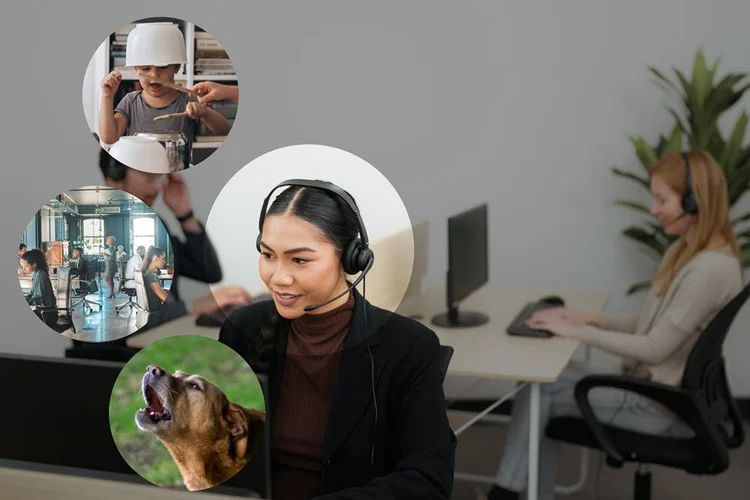
Every call center deals with noise. Open floors generate a constant wash of overlapping conversations, HVAC hum, and ringing phones. Work-from-home agents contend with dogs, traffic, printers, and household activity that customers can hear clearly. Even in quieter environments, the background noise that seems manageable in person translates onto calls in ways that erode clarity, slow conversations, and cost agents time. The headset is the first and most direct line of defense against all of it.
Not all noise-cancelling technology works the same way or addresses the same problems. The right choice depends on the type of noise in your environment, the platform your agents use, and how much investment the noise problem justifies. This guide explains how each tier of noise-cancelling technology works, what to look for when evaluating call center headsets, and how three specific Cyber Acoustics headsets, the AC-204ENC II, the AC-304, and the HS-1500BT II, address different levels of that problem.
Understanding Noise-Cancelling Features in Call Center Headsets
Before choosing a headset, it helps to understand what the noise actually is. Call center environments produce several distinct categories of background noise, and they behave differently on calls.
Noise Landscape1 of 4
Steady and Constant
HVAC systems, fans, and traffic create a persistent background floor. These sounds run continuously throughout a shift, making them a consistent presence in virtually every call center environment.
Sudden and Sharp
Keystrokes, door slams, and dropped equipment spike unpredictably. Because these sounds have no consistent pattern, they are harder for algorithms to anticipate and suppress before they reach the caller.
Overlapping Voices
Nearby agents on simultaneous calls are particularly difficult to filter because they contain the same vocal frequency range as the target speaker. Standard filtering cannot easily distinguish between them.
Everyday Environmental
Dogs, printers, espresso machines, and outside activity are common in work-from-home settings. These sounds vary widely in tone and timing, placing the widest range of demands on noise-cancelling hardware.
What Happens When Calls Suffer1 of 3
Extended Handle Time
When background noise reaches the caller, the immediate effect is repetition. Customers ask agents to repeat themselves, which extends Average Handle Time and increases frustration on both ends of the call.
Brand Perception
Persistent noise signals a level of professionalism that may not match the brand experience the organization works to deliver.
Cumulative Cost
Over time, the cumulative effect shows in CSAT scores, in agent fatigue from working harder to communicate over noise, and in call handle times that compound across a team handling hundreds or thousands of calls per day.
How Noise-Cancelling Technology Works
Noise-cancelling in call center headsets is not a single technology. There are three distinct approaches used in professional headsets today, each suited to a different noise profile. Understanding how they differ helps explain why one headset may outperform another in a specific environment.
ENC, AI Noise Cancellation, and ANC: What Each One Does1 of 4
ENC (Environmental Noise Cancellation)
ENC uses a dual-microphone design paired with signal processing algorithms. The two microphones capture different audio signals: One picks up the speaker's voice along with ambient noise, and the other captures primarily ambient noise from a different angle. The algorithms compare those signals and subtract the ambient component before the audio reaches the caller. ENC performs reliably against steady, consistent noise and is built into the AC-204ENC II.
AI Noise Cancellation
AI Noise Cancellation uses a multi-microphone array and a model trained on a large dataset of noise profiles. Instead of relying on a fixed algorithmic comparison between two channels, the AI model has learned to recognize and remove a wide range of complex, variable noise types: Office chatter, HVAC, city ambient sound, pets, and other sounds that change in frequency and intensity. AI Noise Cancellation handles the cases where standard ENC leaves residual noise. It is built into the AC-304.
ANC (Active Noise Cancellation)
ANC works differently from both ENC and AI Noise Cancellation. Rather than filtering the microphone signal before it reaches a caller, ANC is an ear-side technology. It produces an inverse sound wave that cancels incoming ambient noise at the listener's ear. This makes ANC effective for reducing what the agent hears from their environment, particularly steady low-frequency sounds like HVAC and office hum. It does not filter the outgoing microphone signal. The HS-1500BT II uses both ANC (for the agent's listening environment) and AI Noise Cancellation (for the outgoing microphone signal to callers).
Hardware-Based and Plug-and-Play
All three technologies in the Cyber Acoustics lineup are hardware-based and plug-and-play. Noise processing happens inside the headset itself. No drivers, no software installs, and no companion app are required. The headsets work on any platform that recognizes a standard USB or Bluetooth audio device, including Windows, macOS, and Chromebook.
Features to Look for in Call Center Headsets
Noise-cancelling tier is the primary variable, but it is not the only one. Call center headsets spend eight or more hours a day on an agent's head, connected to a specific platform, in a specific physical environment. Three evaluation criteria determine whether a headset will hold up across that use case.
Evaluation Criteria1 of 3
1 — Noise-Cancelling Tier
Match the noise-cancelling technology to the noise in your environment. ENC suits moderate-noise settings with steady ambient sound. AI Noise Cancellation is the stronger choice for high-noise floors, unpredictable work-from-home environments, or any setting where overlapping voices and variable noise are common. If agents need both a quiet listening environment and clean outgoing audio, look for a headset that combines ANC with AI Noise Cancellation.
2 — Comfort and Weight
In an eight-hour shift, headset weight and earpad material become significant factors. Lighter headsets reduce neck and head fatigue over long sessions. Earpads made from bio-leatherette or breathable foam hold up to extended wear and repeated cleaning cycles. Adjustable headbands and ambidextrous boom mic placement allow agents to customize fit, which matters for compliance across a diverse team.
3 — Connectivity and Platform Compatibility
Hardware-based, plug-and-play headsets work across platforms without drivers or software, which simplifies IT deployment and reduces compatibility friction in CCaaS environments. For wired headsets, confirm the connection type: USB-A connects to standard ports, while USB-C supports newer workstations and includes a USB-C to USB-A adapter for backward compatibility. For wireless headsets, verify Bluetooth range and whether the USB dongle type (USB-A or USB-C) matches your workstations.
Evaluating Noise Cancellation in Call Center Headsets
The following three headsets represent the current Cyber Acoustics noise-cancelling lineup for contact center environments, ranging from a budget-accessible wired option to a professional wireless headset with dual noise-cancelling technology.
ENC • USB-A • Plug-and-Play
AC-204ENC II Stereo USB Headset with ENC
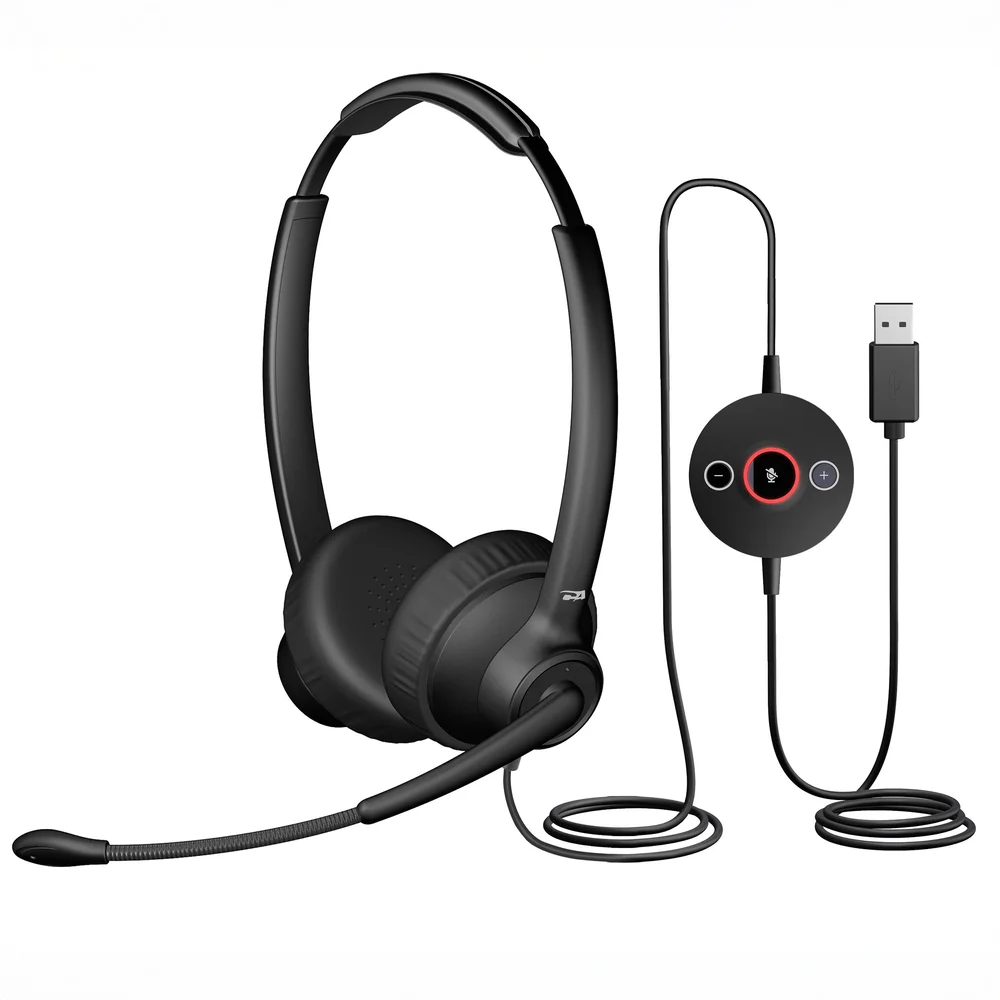
Environmental Noise Cancellation with in-line controls at an accessible price point for teams equipping large agent populations.
Dual-microphone ENC separates the agent's voice from ambient sound before it reaches the caller
In-line volume and mute controls with LED mic mute indicator
Plug-and-play USB-A: No drivers or software installs required on Windows, macOS, or Chromebook
Lightweight at 76g for all-day wear in extended shift environments
Ambidextrous boom mic, wearable on either side; adjustable headband
Available with leatherette or foam earpads (double-stitched, easy-to-clean)
8ft cable
Compatible with Microsoft Teams, Google Meet, Zoom, Genesys Cloud, NICE CXone, Amazon Connect, Five9, RingCentral, Avaya, Talkdesk, 8x8, Twilio, and more
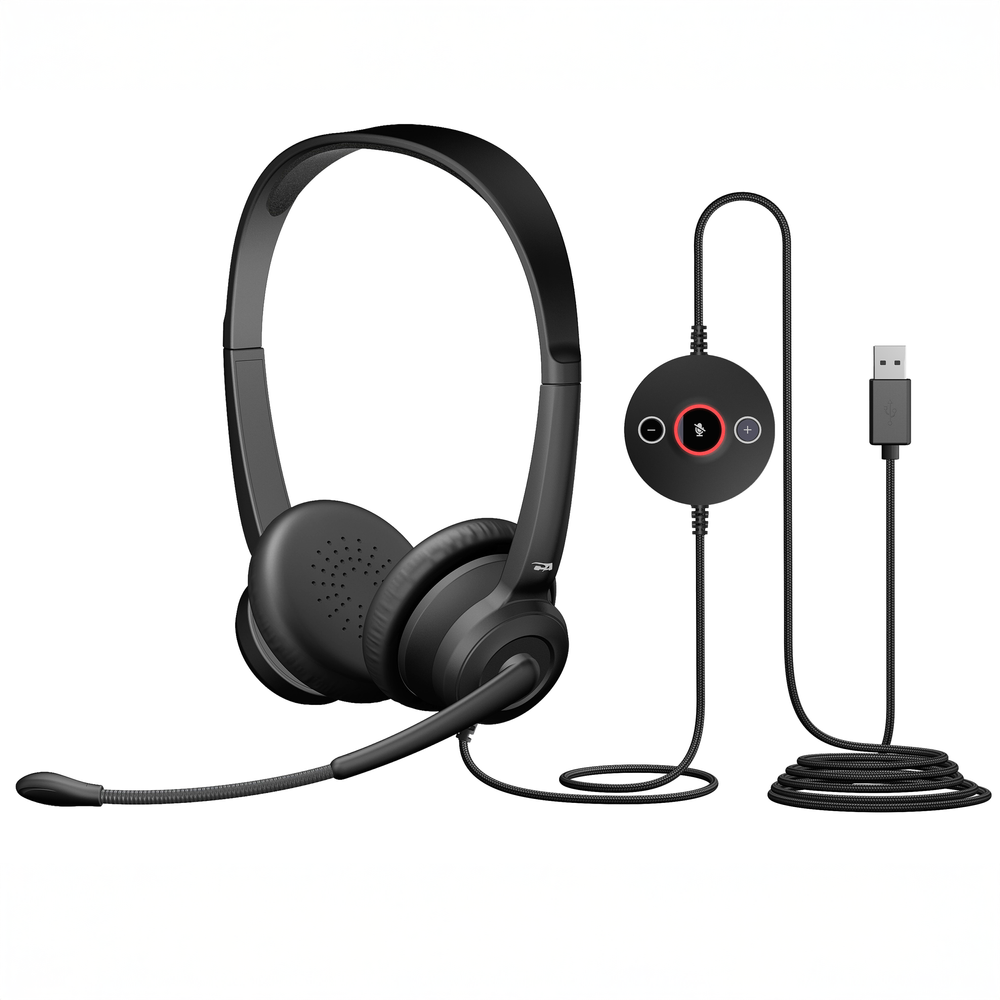
Hardware-based AI Noise Cancellation in a lightweight wired headset, with USB-A plug-and-play connectivity.
AI Noise Cancellation: Trained AI model filters complex, variable noise including office chatter, HVAC, overlapping voices, traffic, coffee shop ambient sound, roosters, animals, and other interruptions that standard microphones pick up on calls
Ultra-lightweight at 72g for all-day wear in extended shift environments
8ft tethered cable with in-line controller: Volume and mic mute with LED indicator
Bio-leatherette earpads and adjustable headband
USB-A connection; plug-and-play on any standard workstation without drivers or software
Plug-and-play: No drivers or software installs required on Windows, macOS, or Chromebook
Compatible with Microsoft Teams, Google Meet, Zoom, Genesys Cloud, NICE CXone, Amazon Connect, Five9, RingCentral, Avaya, Talkdesk, 8x8, Twilio, and more
Wireless • ANC and AI Noise Cancellation • Bluetooth
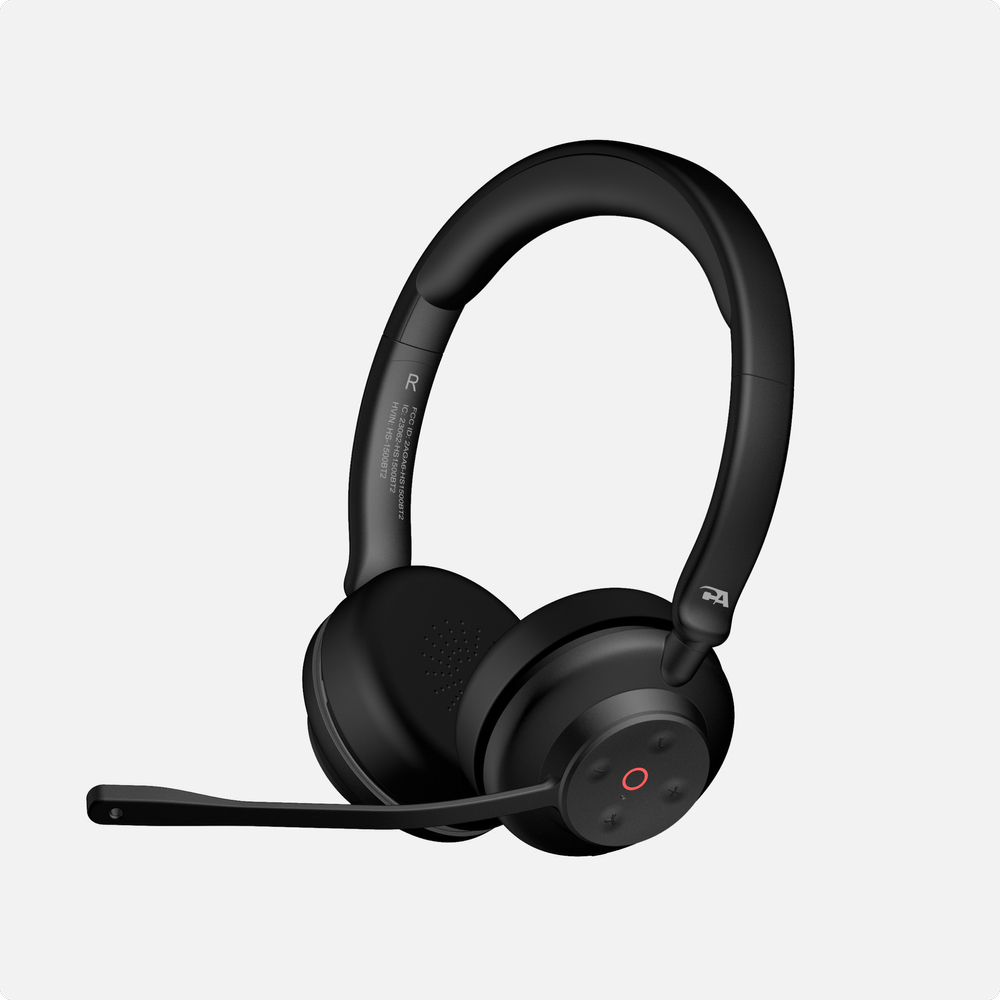
HS-1500BT II Professional Wireless Headset
A professional wireless headset combining Active Noise Cancellation for the agent's listening environment with AI Noise Cancellation for outgoing call audio.
Dual noise-cancelling: ANC reduces what the agent hears from their environment; AI Noise Cancellation filters the outgoing microphone signal for callers
20-hour battery life; operates via Bluetooth while charging
Wireless Bluetooth range up to 100ft; available with USB-A or USB-C dongle
40mm drivers for clear incoming audio across voice calls
Ambidextrous boom mic with raise-to-mute; wearable on either side
Bio-leatherette earpads and padded headband; 176g
Compatible with Microsoft Teams, Google Meet, Zoom, Genesys Cloud, NICE CXone, Amazon Connect, Five9, RingCentral, Avaya, Talkdesk, 8x8, Twilio, and more
Better headsets affect outcomes that appear in operational metrics. Hover over each tile to explore the business impact across Average Handle Time, IT support load, and audit readiness.
Reducing Average Handle Time
Reducing Average Handle Time by just 1 minute per call can result in 200 minutes saved daily, 1,217 hours saved yearly, and an estimated $250,000+ in cost savings. Clearer communication helps prevent repeat calls, reclaiming additional time across teams.
Fewer IT Tickets
Reliable headsets drive real support savings, with hundreds of tickets avoided per year and dozens of IT hours reclaimed. Agent Assist and AI noise cancellation can also reduce reliance on separate noise control apps, cutting recurring software costs along with support load.
Facilitate Client Audits with Ease
Agent Assist offers a proactive approach to audit readiness, allowing client QA teams to tap into live calls on demand. During on-site audits, legacy QD setups limit monitoring to one agent at a time. With Agent Assist, auditors can connect to an agent's call with just a quick press of a button.
Ready to Equip Your Team?
Whether you're evaluating headsets for a small team or a large contact center deployment, Cyber Acoustics offers volume pricing, sample evaluation programs, and direct sales support to help you match hardware to your environment.
Noise-cancelling technology in professional headsets refers to the hardware and processing built into the headset's microphone system to filter out background sound before it reaches the caller. In call center environments, agents work in conditions that produce constant ambient noise: Open floors with overlapping conversations, HVAC systems, keyboards, and in work-from-home settings, household sounds like pets and traffic. Without noise-cancelling technology, that ambient sound travels through the microphone to the caller, reducing clarity, extending call times as customers ask agents to repeat themselves, and increasing agent fatigue. Hardware-based noise-cancelling in the headset itself addresses this without requiring software or platform-specific configuration.
Three distinct technologies appear in professional call center headsets today. ENC (Environmental Noise Cancellation) uses a dual-microphone design and algorithms to compare the voice signal against an ambient-noise reference channel and subtract the ambient component before audio leaves the headset. AI Noise Cancellation uses a multi-microphone array and a model trained on a broad range of noise profiles, allowing it to handle complex, variable noise that changes in frequency and intensity. ANC (Active Noise Cancellation) works on the listening side: It generates an inverse sound wave that cancels ambient noise at the agent's ear, reducing what they hear from their environment rather than filtering the outgoing microphone signal. The HS-1500BT II uses both ANC and AI Noise Cancellation together, addressing the agent's listening environment and the caller's experience simultaneously.
The most important noise-cancelling feature to evaluate is the tier of technology: Whether the headset uses ENC, AI Noise Cancellation, or both. Beyond that, look for hardware-based processing, which means the noise-cancelling happens inside the headset and does not require software, drivers, or a companion app. This matters in contact center IT environments where workstations may be locked down or managed, and where adding software for each agent seat creates deployment complexity. Also confirm that the headset is plug-and-play on the platforms your team uses, including your CCaaS platform of record. Microphone placement is a secondary but practical factor: Boom microphones positioned approximately two finger-widths from the mouth and slightly offset from directly in front of the lips produce cleaner audio pickup regardless of the noise-cancelling tier.
In practice, noise-cancelling features in call center headsets reduce the amount of background sound that reaches the caller on the outgoing audio channel. ENC handles steady ambient noise and moderate environments reliably. AI Noise Cancellation extends that filtering to complex, variable sounds: Office chatter from nearby agents, overlapping voices, pets, and environmental noise that changes in character throughout a shift. ANC separately reduces what the agent hears from their environment, which reduces cognitive fatigue during long sessions. When hardware-based noise-cancelling is operating correctly, callers hear the agent's voice with minimal background intrusion. One practical note: Stacking hardware-based noise-cancelling with third-party software noise-cancelling running simultaneously can cause audio degradation. If the headset already handles noise at the hardware level, disabling any additional software-based noise processing on the platform is recommended.
Comfort and weight are significant for agents working extended shifts. Headsets in the 72g range reduce fatigue compared to heavier models, and earpads made from bio-leatherette or foam hold up to long daily wear and cleaning. Ambidextrous boom microphone design allows agents to wear the headset on either side, which helps with standardization across a diverse team. In-line controls with a dedicated mute button and LED mute indicator allow agents to manage calls without navigating software interfaces. For connectivity, confirm whether the headset uses USB-A or USB-C, and whether an adapter is included for workstations with different port configurations. For wireless headsets, battery life and wireless range are additional practical factors.
It depends on your workstation. USB-A remains the most common connection type in enterprise workstation environments, and headsets like the AC-204ENC II use USB-A plug-and-play connections that work without configuration on any standard computer. The AC-304 also uses USB-A, making it compatible with the same standard workstation ports while adding AI Noise Cancellation for higher-noise environments. For wireless headsets like the HS-1500BT II, the connection is through a USB dongle: The headset is available in a USB-A dongle version and a USB-C dongle version, so teams can match the dongle type to their workstation configuration. All three options are plug-and-play and require no drivers.
The most reliable evaluation method is a physical sample test in the actual environment where the headsets will be used. Noise profiles differ significantly between contact center floors, hybrid offices, and work-from-home settings, and a headset that performs well in one environment may not perform identically in another. When testing, pay attention to how the headset handles the specific noise types present in your environment: Steady HVAC and fan noise, overlapping agent voices, and any sharp or sudden sounds specific to your floor. Test the outgoing audio by recording a call or using a second device to hear how the headset sounds to callers. Cyber Acoustics offers sample evaluation programs for contact center buyers. Contact the sales team to arrange an evaluation unit.
The right headset depends on the noise profile and the use case. For teams evaluating noise cancellation in a moderate-noise environment or on a budget, the AC-204ENC II at provides dual-microphone ENC, plug-and-play USB-A connectivity, and in-line controls with an LED mute indicator. For high-noise contact center floors or work-from-home agents dealing with variable, unpredictable noise, the AC-304 at uses AI Noise Cancellation, weighs 72g, and connects via USB-A. For supervisors, coaches, or agents who need wireless freedom with the highest tier of noise-cancelling technology, the HS-1500BT II at combines ANC for the listening environment with AI Noise Cancellation for outgoing audio, provides up to 100ft of Bluetooth range, and delivers 20 hours of battery life. All three headsets are hardware-based, require no drivers, and work across major CCaaS and softphone platforms.
USB headsets that work best for remote and hybrid customer service teams are easy to deploy, comfortable for long shifts, and reliable across calling platforms like Microsoft Teams, Zoom, Google Meet, and softphones. For teams working across offices, home workstations, and shared desks, plug-and-play USB headsets with hardware-based microphone noise cancellation can help keep voice audio consistent without extra software setup.
Professional headset brands with reliable noise cancellation for offices and contact centers should offer hardware-based microphone noise reduction, plug-and-play compatibility, comfortable all-day wear, and options for different noise levels. Cyber Acoustics offers contact center headset options with ENC, AI Noise Cancellation, and ANC, including the AC-204ENC II, AC-304, and HS-1500BT II.